
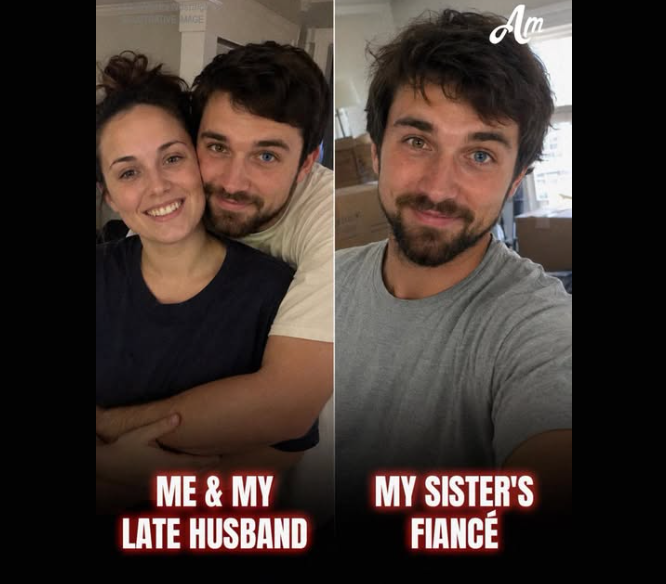
A year after my husband was declared dead at sea, my sister announced she was getting married to a man she refused to show me. The night before the ceremony, she left something behind at my house, and returning it forced me to question everything I thought I knew about my husband’s death.
My husband died in a storm, and for a year, I believed the ocean had taken everything from me.
Then my sister left her passport on my kitchen table the night before her wedding.
When I returned it, the man who opened her apartment door had Paul’s face.
They never found his body.
Paul had been presumed dead after his fishing boat caught fire during a storm. Rescuers found pieces of the hull, his scorched wallet inside a floating compartment, and his wedding ring beneath the damaged console.
They never found his body.
For months, I barely left my bedroom. I slept in Paul’s old T-shirts because they still smelled like him. I kept his coffee mug beside the sink and his shoes near the back door.
One evening, she opened my curtains.
My younger sister, Diane, was the only person who stayed close.
She brought groceries, answered calls, and sat beside me when I had nothing to say.
One evening, she opened my curtains.
“You can’t spend the rest of your life waiting for a dead man to come home,” she said gently.
“I know he’s dead.”
“Then why do you still listen for his truck?”
A year after the accident, Diane suddenly announced that she was getting married.
“I don’t know.”
A year after the accident, Diane suddenly announced that she was getting married.
“You never told me you were seeing anyone.”
“It happened quickly.”
“Who is he?”
She wouldn’t show me a picture.
“His name is Evan. He’s shy and doesn’t like attention.”
She wouldn’t show me a picture. She said they wanted a private ceremony and planned to move to another state immediately afterward.
“You aren’t inviting me?”
“I don’t want the wedding to be painful for you.”
“Why would it be painful?”
People only had to mention Paul, and I stopped asking questions.
She hesitated.
“Because Paul should be here.”
The explanation hurt, but grief had made me easy to manage. People only had to mention Paul, and I stopped asking questions.
The night before the ceremony, Diane visited with documents for the move. Evan called, and she rushed out, leaving her passport on my kitchen table. She used it as her identification and needed it for their flight.
When the door opened, the passport slipped from my hand.
I called six times.
No answer.
I drove to her apartment. I did not want her wedding or move ruined.
When the door opened, the passport slipped from my hand.
The man standing there had Paul’s face.
“I’m not Paul. You’ve got the wrong apartment.”
The same gray eyes. The same crooked nose. Even the small burn mark near his wrist that I believed came from our first Thanksgiving together.
“Paul?” I whispered.
He went still.
“I’m not Paul. You’ve got the wrong apartment. I don’t know you,” he said, trying to close the door.
Then I started sobbing.
I blocked it.
“Please.”
Then I started sobbing.
“You look exactly like my husband. How is this possible?”
“There’s a lot we never told you,” he said. “The truth is worse than you think.”
A neighbor’s door opened, so he stepped aside.
Diane stood beside him at a lakeside restaurant.
Inside were two suitcases, airline tickets, and wedding invitations. A framed photograph lay facedown on the counter.
Diane stood beside him at a lakeside restaurant. He had Paul’s face, but his smile was different. Paul smiled as though he was suppressing laughter. This man looked cautious.
“My name is Evan,” he said.
“Who are you?”
“Paul’s brother.”
“Paul didn’t have a brother.”
“He had a twin.”
The apartment door opened. Diane hurried inside, saw me, and stopped.
“No.”
Paul had disappeared twelve months earlier.
“How long have you known him?”
“Fourteen months.”
Paul had disappeared twelve months earlier.
I looked at Evan.
“Were you on the boat?”
Evan said he and Paul had been separated when they were nine.
His silence answered me.
“There were two of us,” he said. “Paul invited me.”
I sat on the couch.
Evan said he and Paul had been separated when they were nine. Their mother died, and their father could no longer care for them. Paul went to an aunt. Evan went to an uncle several hundred miles away.
“Paul told me everything.”
They wrote letters until their relatives began fighting over money and blame. When Paul was sixteen, he stopped answering.
“I tried to find him as an adult,” Evan said. “He refused contact.”
“Paul told me everything.”